Easter Recipes
Easter is a very special time of year in Skopelos Island, Greece. The island celebrates with a variety of traditions and festivities, including religious processions, feasts, and fireworks displays.
Skopelos is also celebrating Easter with many traditional foods and recipes. Here are some of the most popular Easter recipes in Greece:
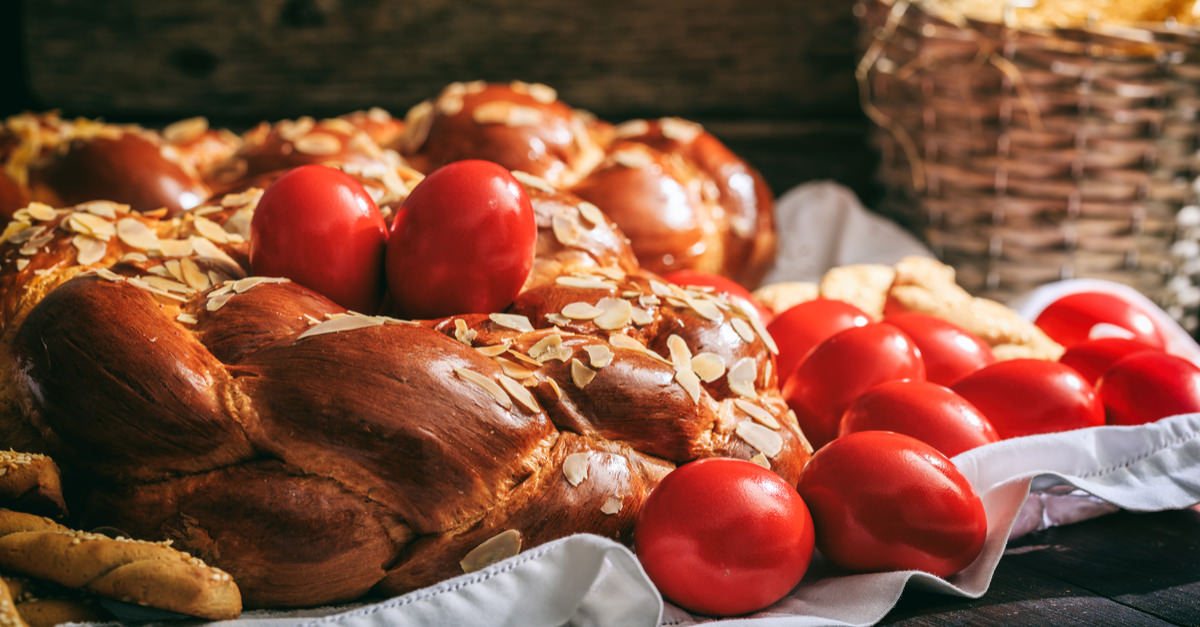
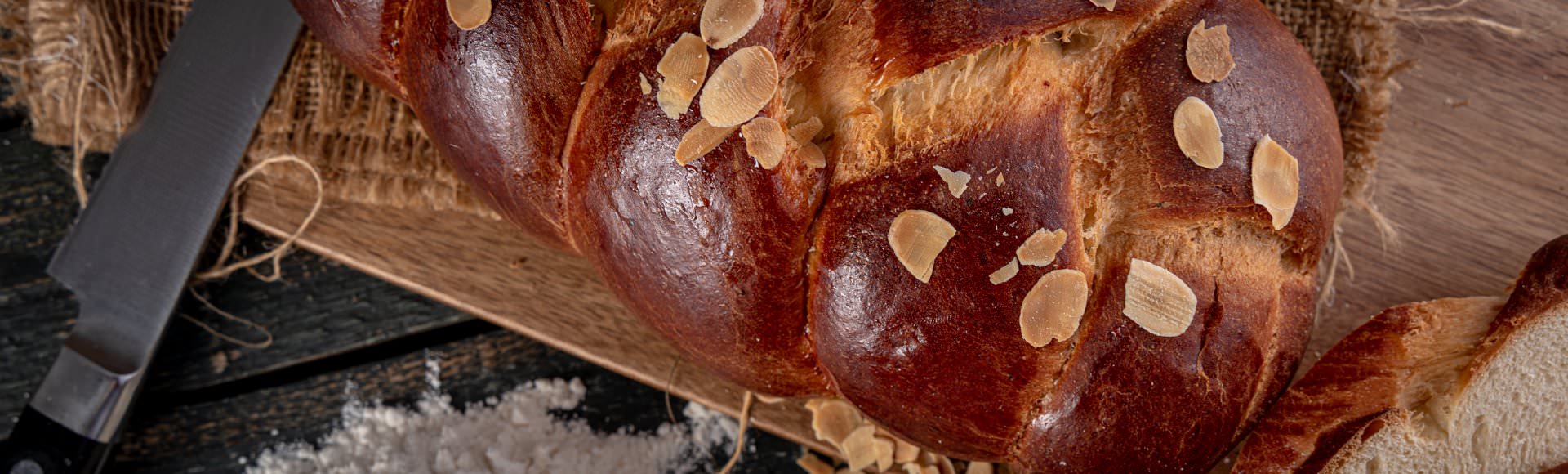
- Tsoureki: Tsoureki is a sweet bread that is traditionally made for Easter. It is flavored with mastic and mahlepi, two aromatic spices, and is usually decorated with red-dyed eggs.
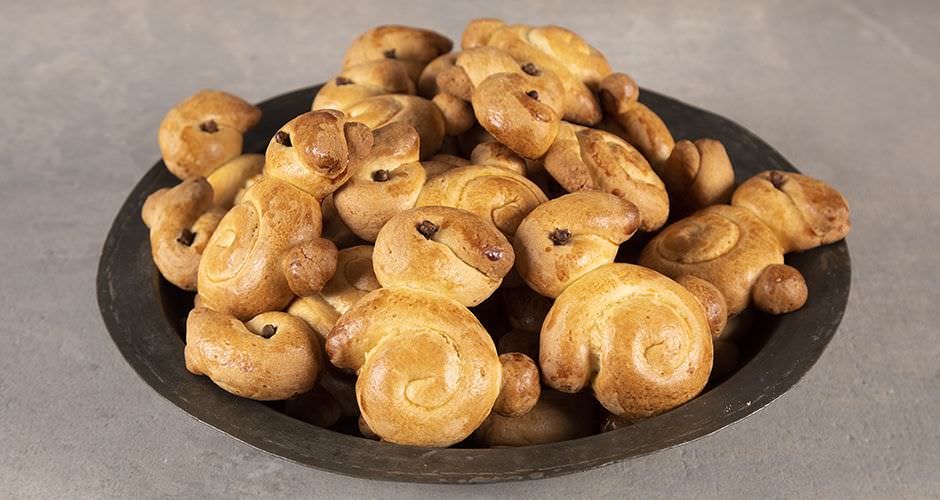
- Koulourakia: Koulourakia are traditional Easter cookies that are often flavored with orange or vanilla. They are usually shaped into rings or braids and are a popular treat during the Easter season.
- Magiritsa: Magiritsa is a soup that is typically served after the midnight church service on Easter Sunday. It is made with lamb offal, onions, dill, and lemon juice.
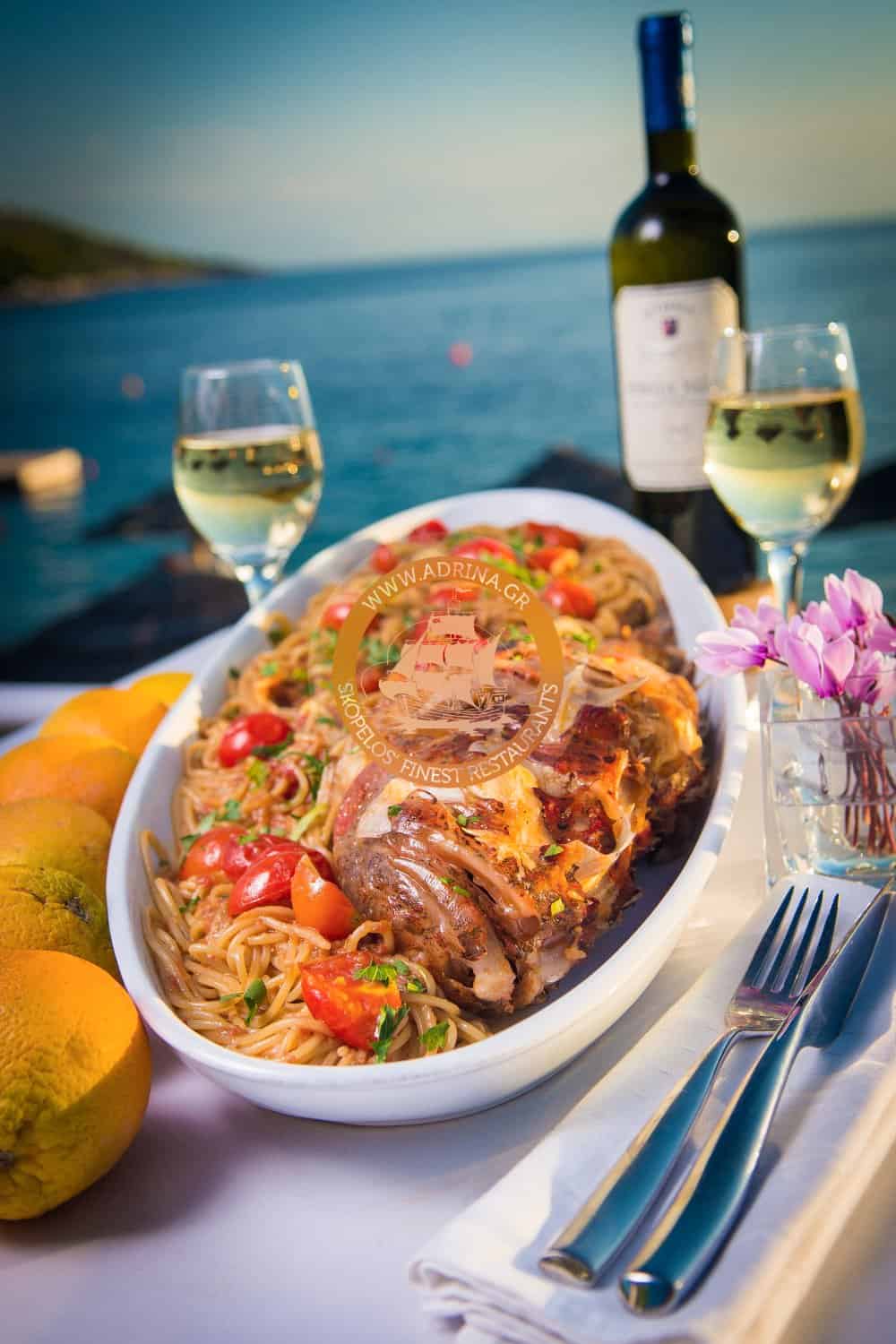
- Lamb Goat: Roast lamb is the centerpiece of the Easter Sunday feast in Greece. The lamb is typically roasted on a spit and seasoned with garlic, lemon, and oregano.
- Kokoretsi: Kokoretsi is a traditional Greek dish made from lamb offal that is wrapped in the intestine and roasted on a spit. It is typically served during the Easter feast. Although its preparation is a bit time-consuming, the result is always impressive and delicious.
Easter Sweets Flavors in Skopelos
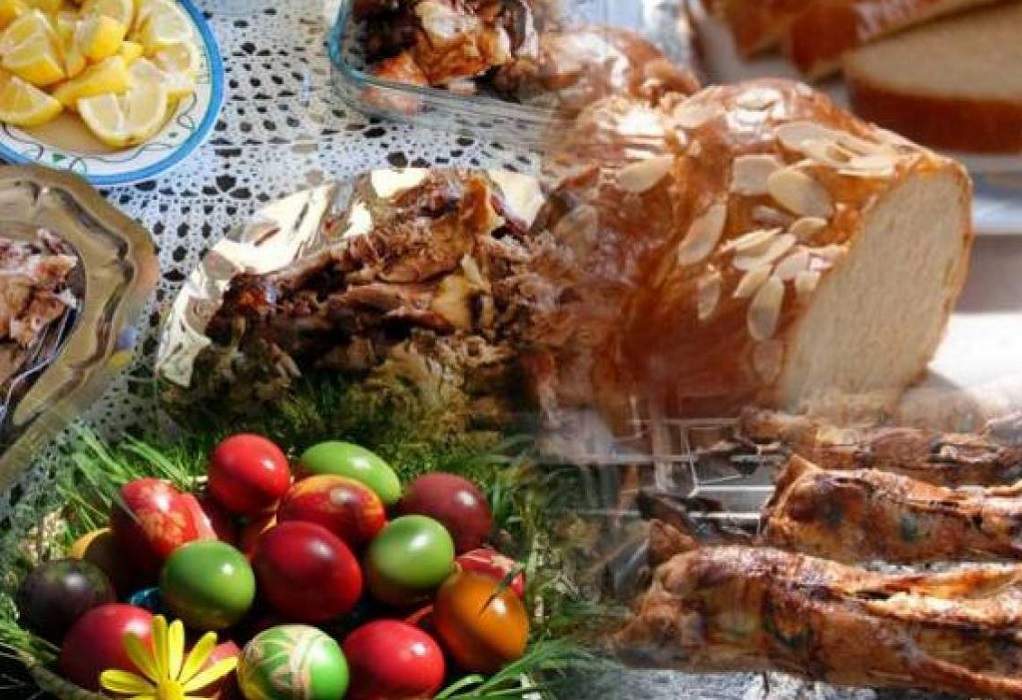
The Easter sweets starring in all the houses of Skopelos are buns (tsourekia) and crisp cookies (koulourakia).
Greek Buns (Tsourekia)
Giannis Loukakos, on his website, gives us the following excellent and relatively easy recipe for delicious tsourekia!!
Recipe Ingredients
- 28 g dry yeast
- 190 g milk
- 220 g sugar
- 600 g brioche flour
- 10 g mahlepi, grated
- 5 g mastica, grated
- 15 g orange zest
- 120 g eggs, beaten
- 160 g butter, softened
- 4 g vanilla extract
- 6 g salt
- 1 egg for the spread, beaten
- 60 g almond fillet
Method
In a small saucepan, heat the milk with some of the sugar (10 g) until it reaches 35°C. Add the yeast and stir until it dissolves. In a bowl, add 200 g of the flour from the recipe, add the hot milk and yeast mixture, and stir until combined. Cover the bowl with plastic wrap and let it rise and double in volume. It will take about 45 minutes in a 35 °C oven. In a mixing bowl, combine the flour, mahlepi, mastic, sugar, and orange zest. Transfer the yeast mixture to the mixer bowl and attach the hook. On low speed, slowly add the flour mixture, and once it is finished, add the eggs and allow them to combine. Then increase the mixer speed and gradually add the softened butter, waiting for the previous batch to be incorporated before adding the next. Once all the butter is incorporated, add the salt and vanilla and continue to beat the dough for about 20 minutes more on high speed until the dough is uniform and smooth and comes away completely from the bowl. Attention! At the beginning of the process, the dough looks odd in texture, and you may get the impression that it needs more flour. Do not add flour, or the dough will become soggy. With beating, it will come together just right. Remove the dough from the bowl and place it in a large bowl that has been greased with butter, cover with cling film, and leave in a warm environment for at least 3 hours to double the volume of the dough (for quicker results, place in the oven at 35 °C). Remove the dough from the pan and press it lightly by hand to deflate it. To make 1 brioche, divide the dough into 3 equal-weight pieces of 400 g each. To make 2 buns, divide the dough into 6 equal pieces of 200 g each. Shape into 3 35 cm sticks, and place them perpendicular to each other lengthwise, leaving about 6 cm between them. Starting on the side that is away from us, join the ends of the 2 outer sticks together, then bring the end of the middle stick over the joint and press to stick. Bring the right stick over the middle stick and between the middle and left, then bring the left stick over the right and between the right and middle sticks. Continue in this way to make the braid, and when you reach the end, join the ends and roll them up under the braid. Carefully compress the braid lengthwise and widthwise to correct the shape of the braid. If you are making 2 buns, repeat the process with the 2nd bun. Place the brioche in a baking pan that has been greased with butter or covered with parchment paper and leave in a warm environment (35 °C) until they double in volume, for at least an hour. Very carefully brush the surface of the buns with a brush. Sprinkle with the almond fillet and bake in a preheated oven at 165°C, until the brioches are golden brown, for about 30 minutes. Place the brioche on a wire rack to cool. Tip 1: You can check for proper baking by placing a thermometer in the center of the brioche. We want the temperature to have reached 90°C. Tip 2: The rising stages can be done at room temperature or even in the refrigerator. The difference will be in the time it takes to complete the process, and possibly the longest time will benefit the dough flavor-wise.
Greek Easter Cookies (Koulourakia)
Akis Petrentzikis, on his website, gives us the following excellent recipe for easter cookies!!
Recipe Ingredients
- 300 g butter
- 300 g granulated sugar
- 1 teaspoon vanilla extract
- 2 eggs, medium
- 120 g orange juice
- orange zest, of 2 oranges
- 50 g brandy
- 1 kilo of all-purpose flour
- 1/2 teaspoon baking powder
- 1/2 teaspoon baking soda
- 50 g whole milk
- 1 pinch salt
- cloves, for the eyes
- 1 egg yolk, diluted in 2 tablespoons of water
Method
Preheat the oven to 190οC (375ο F) and set the fan to. In a mixer’s bowl, add the butter, sugar, and vanilla extract, and beat with the paddle attachment at medium speed for 5 minutes, until the mixture is fluffy. Then, add the eggs one by one, the orange zest and juice, and the cognac, and keep beating.
In a bowl, add the flour, baking powder, and baking soda, and mix with a spoon.
Add half of the solid ingredients into the mixer, the milk, and the salt, and keep beating for 1-2 minutes.
Remove the bowl from the mixer, add the remaining solid ingredients, and mix with a serving spoon until the ingredients are homogenized. Then, knead with your hands until a dough is formed. Your cookies will be shaped like bunnies.
Cut a 30 g piece, shape it into a strip, and swirl it like a snail. In this way, you will create the body of the bunny.
Cut a 15 g piece, shape it into a small strip, and roll it into the shape of a fish. In this way, you will create the head of the bunny. Add a clove to create the bunny’s eye. Cut a 3 g piece and shape it into a ball. In this way, you will create the tail of the bunny.
Follow the same process for the whole dough.
Transfer the cookies to baking pans lined with parchment paper, spread them with the egg wash, and bake for 15-20 minutes. Let them cool and serve.
Bakeries in Skopelos
We suggest the following bakeries – pastries for traditional Easter sweets of Skopelos.
- Kochilis Bakery, Chora Skopelos, Tel: +30 24240 23473
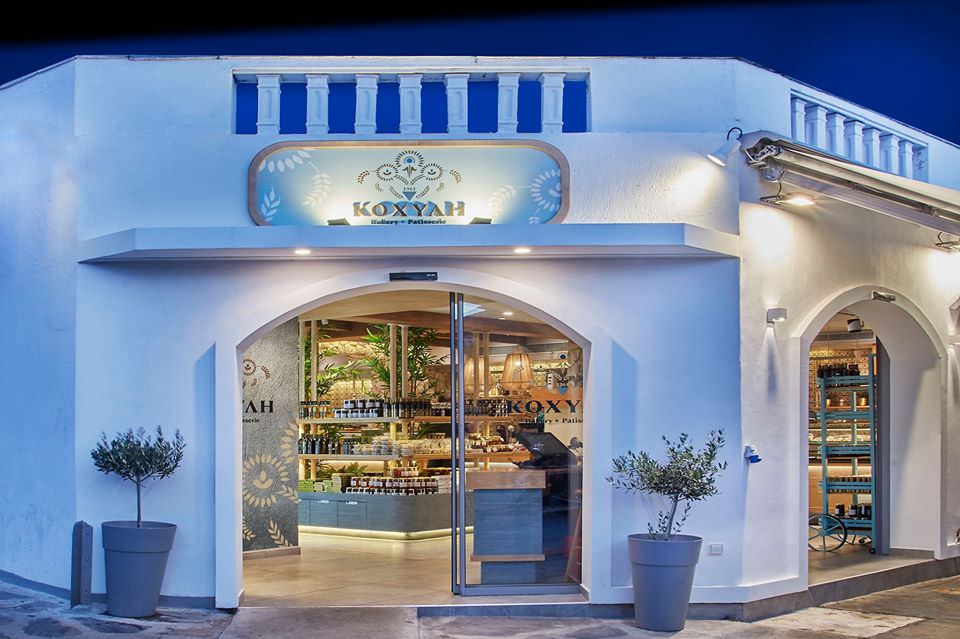
- Skopelitissa, Chora Skopelos, Tel: +30 24240 23448
- Gkika Cafe Patisserie Bakery, Chora Skopelos, Tel: +30 24240 22926
- Kanela, Chora Skopelos, Tel: + 30 24240 23953
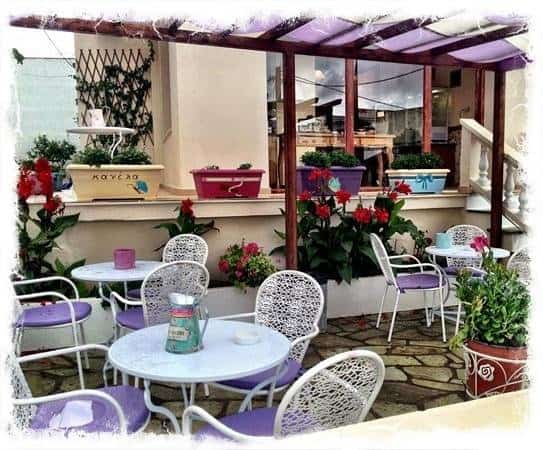
- Ambrosia Traditional Homemade Sweet, Chora Skopelos, Tel: +30 24240 24363
- Karvelis Bakery, Neo Klima – Elios Skopelos, Tel: +30 24240 34192
- Kyra – Leni, Glossa Skopelos, Tel: +30 24240 33688
The traditional Skopelos flavors, such as the famous cheese pies of Skopelos and the popular almond sweets, are available all year in the relevant shops. Overall, Easter is a time of great significance and celebration in Skopelos Island, with deep religious meaning and cultural traditions that are passed down from generation to generation.