Unveiling the Magic of Apokries – Skopelos Island Carnival Celebration
Apokries, also known as Apokria, is celebrated with great enthusiasm on the beautiful island of Skopelos in Greece, just like in many other parts of the country. While specific customs and traditions may vary slightly from one region to another, the essence of the annual celebration remains consistent throughout Greece.
The Period of Carnival Events
Apokries (Halloween) are deeply rooted in Greek and Skopelos Island tradition, and last for three weeks preceding the Great Lent. The Greeks use the expression ” Triodo is opened” to explain that the Carnival fests have started. It commences with the Sunday of the Publican and Pharisee. The specific Sunday also marks the use of the Orthodox book “Triodion” in the Church. Apokries ends up on Shrovetide Sunday. Ash Monday is the day after. The initial week is termed “arti-bourtsi,” during which fasting is not practiced even on Wednesdays and Fridays. The second Sunday following the Prodigal Son is referred to as “creatine” due to the frequent consumption of meat. The next Sunday is called “Tirini or White” from the Greek word “tiri “which means cheese. Due to the consumption of dairy products.
The Customs of Carnival on Skopelos Island
For years, the public festivities unfolded in an organized manner, following a consistent pattern. There were differences between the first (Kreofagos or Meat Sunday) and the second Sunday (Tyrini or Cheese Sunday). More specifically, during Meat Sunday, the celebrations were characterized by lively and Dionysian revelry. People were dressed as masquerades with humorous moods of individuals and circumstances. Certain elements appeared to have their origins rooted in the Dionysian festivals. The songs, for example, contain inappropriate words; nevertheless, everybody is singing them with joy.
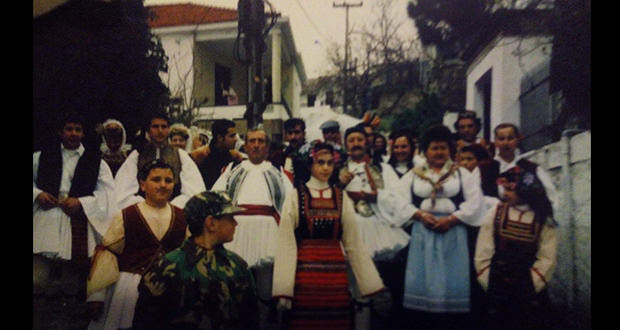
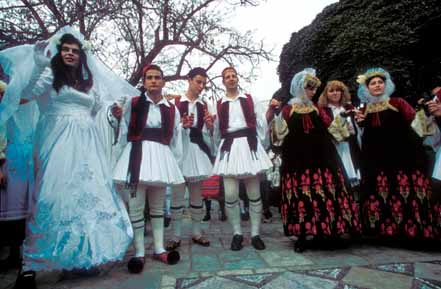
During the carnival of Tyrini, a procession with a wedding ceremony took place where young people were dressed up in rich costumes. The celebrations were accompanied by songs that were decent and harmonious. The Carnival festivities extend over three weeks, commencing with “Tsiknopempti” (Thursday). During this time, both young and old masqueraders roam the streets of Skopelos, clad in various costumes. They engage in laughter, song, and playful banter with everyone they encounter, culminating on the last Sunday of Apokries. Among the renowned Carnival customs in Skopelos are the wedding procession, along with activities such as “good,” “bramdes,” and the traditional “trata” (Trawl).
The Custom of Bramdes
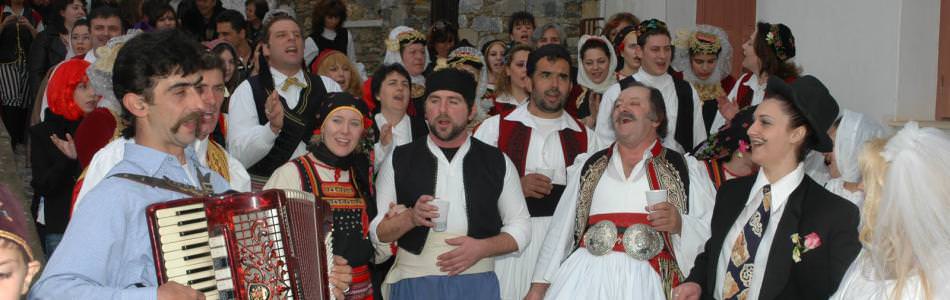
The “Bramdes” represent the traditional attire of Skopelos, featuring well-crafted handkerchiefs, trousers, foustaneles (local men’s costume), and silver charpas (tsaprazia). They wander through the streets of Skopelos, singing the iconic Skopelos song “Vlacha.”
Ante na pame Vlacha sto pera kafene
Na se trataro Vlacha soumada kai argile …
den thelo ti soumada oute ton argile
mon thelo ena loukoumi kai ena gliko kafe
(Let’s go to the coffee shop across the street. I’m going to take you out to the café, for soumada and nargile… I don’t want the soumada, and I don’t want the argyle I just want a loukoumi and a sweet coffee…) Gathering in Gyftorema, Christos, and Mylos, the “Bramdes” continue their festivities, singing and dancing. Generous homeowners open their doors to offer traditional Skopelos sweets such as rice pudding (rizogalo), galaktoboureko, and abundant wine.
The Custom of Wedding Procession – Kales
These costumes symbolized a wedding procession, with a male figure portraying the role of the bride. Everyone is participating and engaging in satirical portrayals of various characters. Amidst singing, they indulge in the popular “indecent” and non-conventional carnival songs, all while enjoying their drinks happily. Referred to as “Kales” by the locals of Skopelos, these revelers emerged on the last Sunday of Apokria.
The Custom of Trata
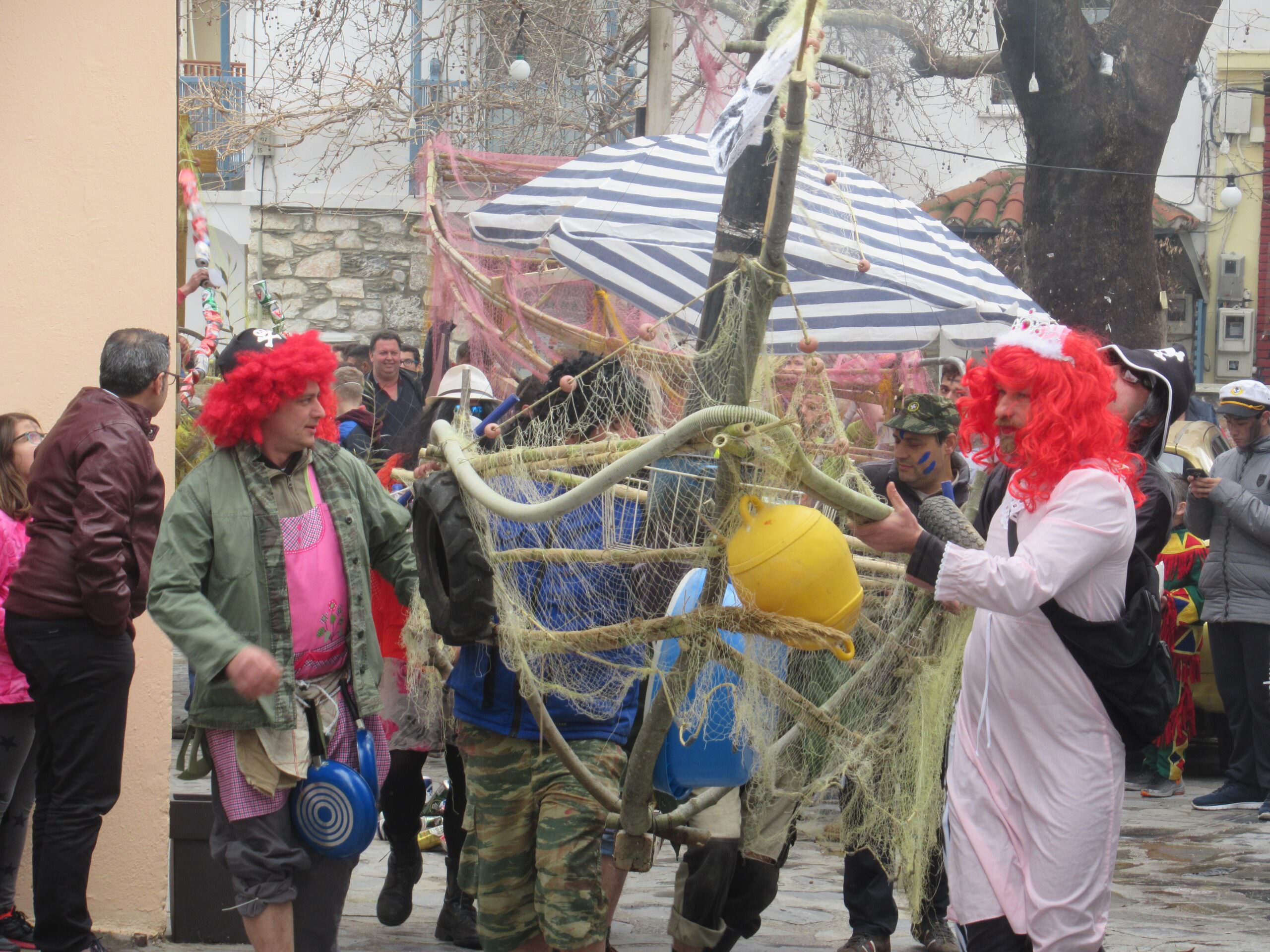
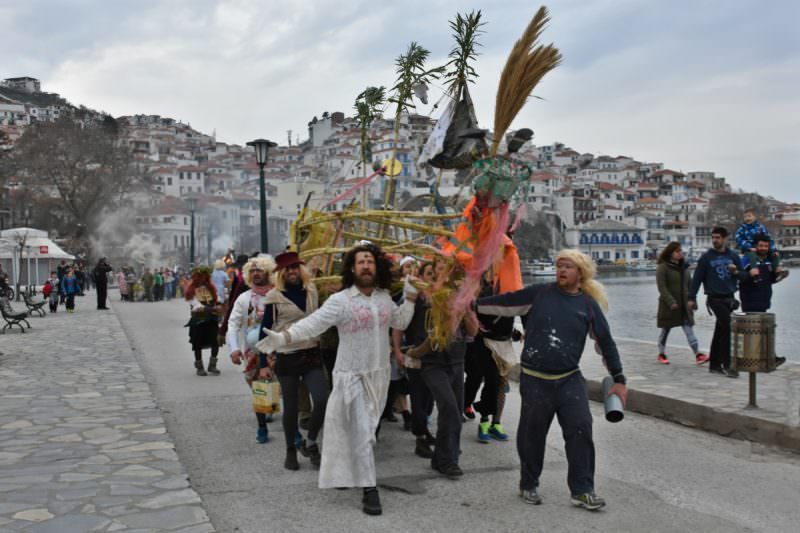
On the last Sunday of Carnival in Skopelos, the locals celebrate the custom of the Trata. People dressed up as masquerades to carry a boat made of reeds and wood, the Trata. Those who carry the trawl are called mutzourides, since they have smudged faces with black paint. Along the way, the whole bunch sings songs, drinks, and teases the bystanders. The masqueraders, for example, hold nets and catch any passers-by. Trata followers are also in disguise. The housewives again treat passers-by to rice pudding and wine. The whole procession ends up at the beach, where they will put the Trata in the sea. The feasting and dancing last until the early hours of the morning. This custom has its roots in the attacks of the terrible pirates on the Aegean islands.
Clean Monday
Skopelos folks, on Clean Monday, keep the tradition going by painting a blue cross on their foreheads and sticking a hyacinth twig in their ears. They eat lightly and lent food and drink wine at the beaches, in their homes, and out in the fields.
Blash from the Past – Apokries in Skopelos
In past times, the grand celebration of Apokria (Meat Sunday and Cheese Sunday) was the biggest and most enjoyable event in Skopelos. Everybody was involved, and the fiestas were cherished by families and groups from all walks of life the same. With roots tracing back to antiquity, these customs and celebrations reflected the prevailing climate and spirit of the era.
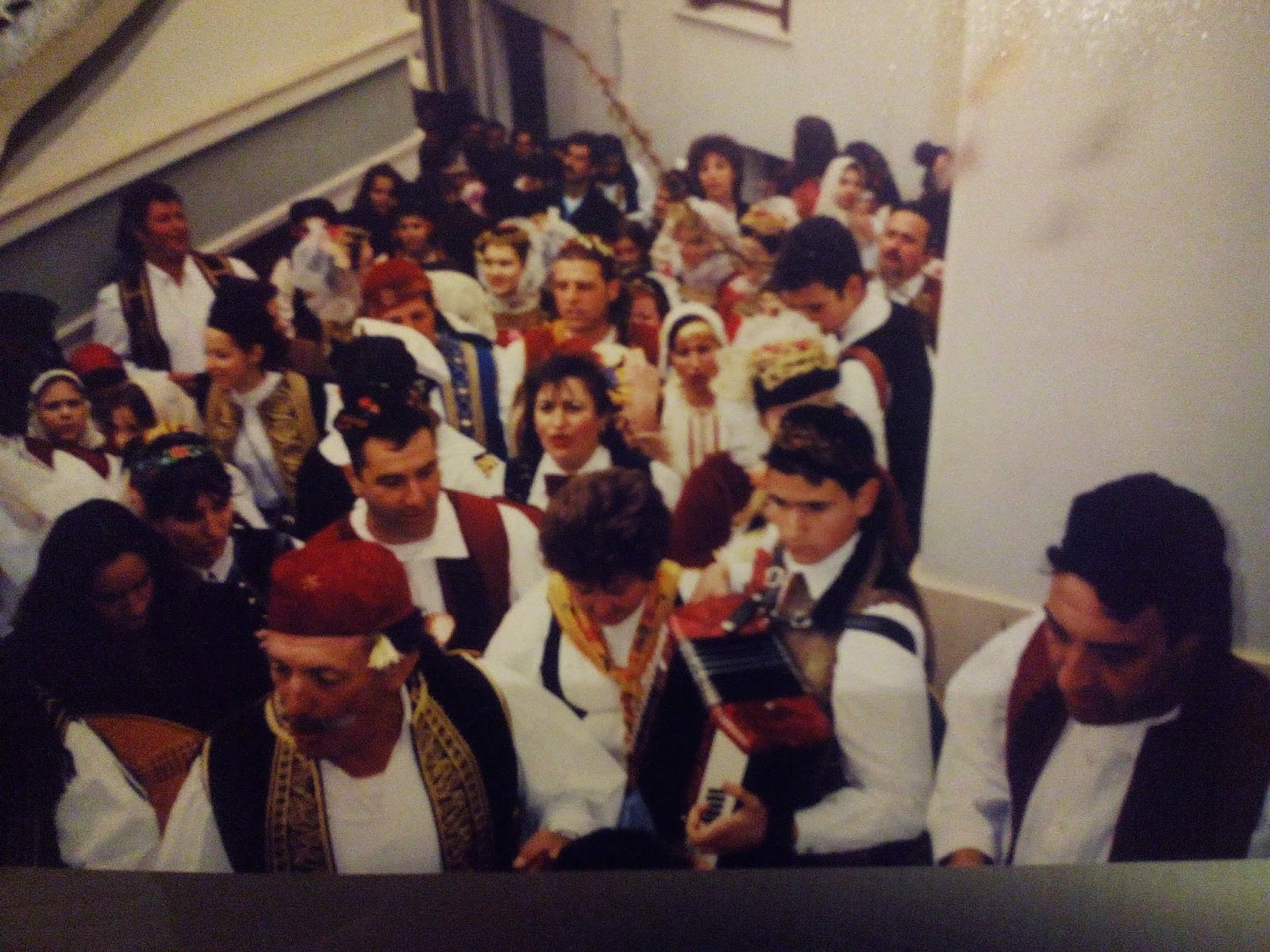
The significance of these occasions was so profound among the people of Skopelos that even those who worked abroad, such as sailors, shipbuilders, and builders, made it a point to return home specifically to celebrate the local customs and revelries of Carnival. Overall, Apokries on Skopelos Island is a time of jubilation, creativity, and community spirit. It offers residents and visitors alike the opportunity to revel in the rich cultural heritage of Greece while forging cherished memories that will last a lifetime. Whether participating in parades, indulging in delicious food, or simply soaking in the festive atmosphere, Apokries on Skopelos is a celebration not to be missed. Greek Carnival Traditions and Carnival Celebration on Skopelos Island are a must.